
A severe cold wave has gripped North India, with temperatures plummeting to near-freezing levels in several areas. The cold wave has disrupted daily life, with dense fog affecting visibility and forcing people to stay indoors.

Delhi recorded its coldest January morning in three years with the minimum temperature dropping to 3 degrees Celsius. Cold wave conditions are expected to persist, and air quality has deteriorated to the 'very poor' category.

The national capital was in the grip of a cold wave, with the sun largely obscured by clouds and pollutants lingering in the atmosphere, leading to reduced visibility. At least 129 flights were cancelled at the Delhi airport on Saturday due to dense fog, according to an official.

A severe cold wave has intensified across North India, with Delhi recording its lowest temperature of the season. Rajasthan experienced sub-zero temperatures, and several states have issued alerts and closed schools due to the extreme conditions.

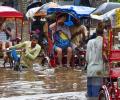
Various parts of Surat were flooded after incessant rainfall in the region. Over 100 mm of rain has blocked roads and led to waterlogging in several low-lying areas.

Heavy overnight rain in Gurugram caused widespread waterlogging and traffic gridlock, bringing the city to a standstill. Several residential areas and major roads were inundated, leading to commuter chaos.

IMD data shows in the 24 hours between September 1 and 2, Haryana received 806 per cent more rainfall than normal, Punjab 759 per cent, Himachal Pradesh 510 per cent, Delhi 740 per cent, Chandigarh a staggering 1,638 per cent, and Rajasthan 193 per cent.

Strong demand for cultural and spiritual hubs is expected for destinations like Varanasi, Kolkata during Durga Puja, and Pushkar for the camel fair, besides leisure destinations like Goa, Udaipur, Jaipur and Coorg.
The early onset of the southwest monsoon brought continuous rainfall across southern and eastern India, contributing to this record.
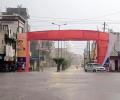
Heavy rainfall across North India leads to fatalities, structural damage, travel disruptions, and school closures. Eastern states brace for more rain.

Flash floods triggered by a cloudburst in Mandi, Himachal Pradesh, resulted in casualties and widespread damage, prompting rescue operations and relief efforts.

The labourers, who are said to be of Nepali origin, were engaged in the construction of a hotel.

A 22-year-old youth and a person with disability died, while at least 11 were injured, in separate rain-related incidents in the national capital on Wednesday evening. The incidents occurred amid sudden changes in weather in Delhi, as a rainy storm marked by hail wrecked havoc across the city, throwing traffic out of gear as far as Delhi-Noida, Delhi-Ghaziabad, and Delhi-Gurugram roads and uprooting several trees.

Although the Mohali pitch is expected to play even throughout game, curator Daljeet Singh says whosoever bowls first will have a slight advantage for the initial 10 to 12 overs.
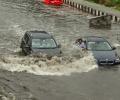
At least 28 people died in rain-related incidents Sunday as heavy downpours lashed north and northwest India, causing landslides, traffic chaos and house collapses, as well as a dam breach which inundated several villages in Haryana.

The meteorological centre in Shimla issued a 'red' alert on Sunday for very heavy downpour in 10 districts of Himachal Pradesh, while services on the Shimla-Kalka rail line were suspended for hours till the debris and trees fallen on the tracks following overnight rains were removed.

Delhi sweltered under intense heat as the Safdarjung observatory, considered the official marker of the national capital, noted a high of 43.8 degrees Celsius, four notches above the normal average.

A cold wave has intensified in most parts of north India, with temperatures in the Kashmir Valley dipping below freezing point. The national capital saw a brief respite from the bitter cold during the day, but cold conditions persisted in parts of Rajasthan and Himachal Pradesh. The weather department has issued a yellow warning for cold wave, ground frost and dense fog for some places in Himachal Pradesh. There is a possibility of rain and snowfall in parts of northwest India later in the week.

Among the fatalities recorded on Friday, the maximum 17 were from Uttar Pradesh, 14 from Bihar, five from Odisha and four from Jharkhand, where officials said more than 1,300 people are hospitalised with heatstroke conditions.

Satellite imagery showed a layer of dense fog extending from Punjab and north Rajasthan to the northeast. Patches of fog were also visible along the east coast.

To ensure immediate cooling of the body, the hospital has set up a first-of-its-kind heatstroke unit.

Delhi saw seven cold wave days in January 2020, while it did not record any such day last year.


Satellite imagery showed a dense elongated band of fog stretching from Punjab to the northeast.

Delhi's primary weather station, the Safdarjung Observatory, registered a maximum temperature of 40.4 degrees Celsius, four notches higher than normal.

Mercury hovered around 40 degrees Celsius in large parts of the country on Monday as the Indian meteorological department predicted heat wave conditions in parts of east India over the next four days and the northwest region over the next two days.
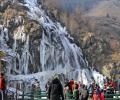
A cold wave has gripped many parts of north and east India, with Srinagar recording a minimum temperature of minus 5.3 degrees Celsius. Other areas experiencing below-freezing temperatures include Gulmarg, Pahalgam, Konibal, Qazigund, Kupwara, and Kokernag in Kashmir. Himachal Pradesh has issued an orange warning for severe cold wave conditions in several districts. Delhi recorded a minimum temperature of 5.9 degrees Celsius, while Faridkot in Punjab was the coldest in the region at 0 degrees Celsius. Extreme cold conditions also continued in parts of Rajasthan and Jharkhand. The Met office has forecast mainly dry weather until December 26, with the possibility of light snowfall in the higher reaches of Kashmir on the intervening night of December 21-22.

The threshold for a heat wave is met when the maximum temperature of a weather station reaches at least 40 degrees Celsius in the plains, 37 degrees in coastal areas, and 30 degrees in hilly regions, and the departure from normal is at least 4.5 notches.

Temperatures in 17 locations breached 45 degrees Celsius on Monday, with the punishing heat affecting health and livelihoods.

Several deaths were reported across the country due to rain-related incidents like lightning strikes and drowning.

The mercury in Delhi, which recorded its hottest day of the year so far at 45.6 degrees Celsius on Sunday, came down to 42.4 degrees Celsius, according to the India meteorological department.

Cold-day conditions prevailed in parts of north India on Friday though the maximum temperatures rose slightly amid clear skies and sunshine during the day.

Amid a cold wave prevailing in parts of northern India, Palam in Delhi recorded a minimum temperature of 6.5C while Safdarjung recorded a minimum temperature of 5C, said India Meteorological Department on Monday.

Temperatures remained above 45 degrees Celsius in large parts of Rajasthan, Haryana, Delhi, Chandigarh and Uttar Pradesh, affecting daily life as many chose to remain indoors in the afternoon.

Intense heat swept through east India and parts of the southern peninsular region on Thursday, testing power grids and prompting the Kerala government to order closure of educational institutions till May 6.

The state broadcasters have started the practice, but private news channels may follow suit, a ministry source said.

Large parts of north India reeled under numbing cold on Tuesday with the mercury remaining below freezing point at most places in Jammu and Kashmir, while dense fog in the early hours of the morning hit road and rail traffic movement.

The India meteorological department has stated that day temperatures are likely to be above normal by 0.5 degree Celsius, reports Sanjeeb Mukherjee.

Operations at the Delhi airport remained normal. However, three flights were returned or diverted to the Delhi airport due to bad weather in Chandigarh, Varanasi and Lucknow on Tuesday night.

The national capital battled weather conditions in the "red category" as the maximum temperature recorded at the Palam observatory was 46.1C,
 © 2026 Rediff.com - Investor Information - Advertise with us - Disclaimer - Privacy Policy - Sitemap - Feedback - About us - Terms of use - Grievances